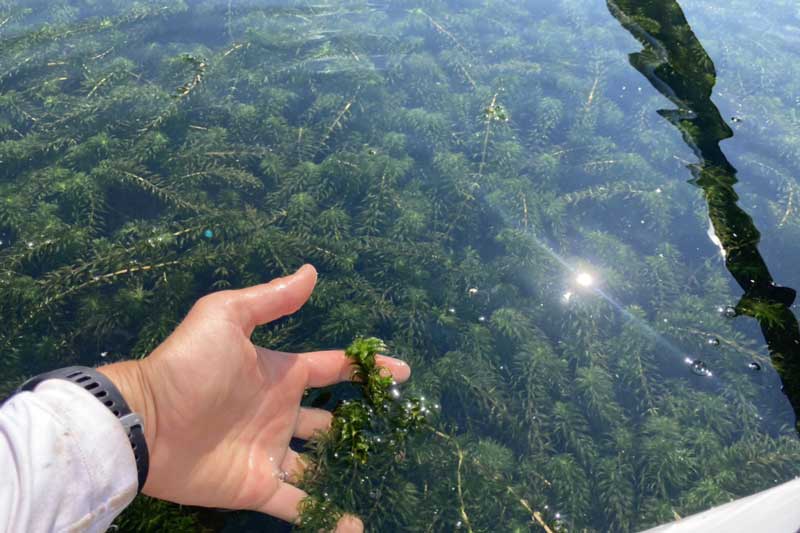
Hydrilla is the common name and the genus name of an intensely unwanted invasive plant that threatens our Wild and Scenic Rivers. It has been found in two water bodies in South Kingstown, Indian Lake and Worden Pond, and in West Greenwich in Lake Mishnock. This aquatic invasive plant is extremely difficult to manage. Hydrilla can successfully reproduce by seeds or roots like most plants, but just a fragment of about an inch of stem with a few leaves can grow its own root system to generate a whole new plant. It tolerates a wide range of temperatures, pH, salinity, and light conditions, and has a rapid, aggressive exponential growth rate, quickly outcompeting all native and non-native aquatic plants. A significant concern is the spread of this plant to other waterbodies by recreational activities. Boats, boat trailers, canoes, kayaks, SUPs, fishing gear and other water toys can easily transfer plant fragments to different water bodies if not cleaned before leaving the pond. The scope of this invader in the Wood-Pawcatuck System is frightening in that plant fragments leaving Worden Pond floating downstream could eventually extend its growth in the watershed to the brackish waters of Westerly. The popularity of water-dependent recreation in this watershed raises the level of concern, as transferring the plant on recreational devices to other waterbodies in the State and neighboring States could be disastrous.
What is being done
The Wood-Pawcatuck Wild and Scenic Stewardship Council (Stewardship Council) has been fully engaged working with the Rhode Island Department of Environmental Management (RIDEM) Office of the Director, Office of Water Resources, and the Fish and Wildlife Division on ways to mitigate and control the spread of Hydrilla. Federal funding, secured by RI’s US Senators, has facilitated RIDEM’s oversight of a treatment to attempt to eradicate and or control the infestation in Worden Pond. As reported in a RIDEM press release, treatments for the invasive plant, hydrilla, began on Friday, August 7, 2026 with periodic repeated treatments through November. The EPA-approved herbicide, Fluridone, will be used at a low-dose concentration to specifically target invasive hydrilla and lower any impacts on sensitive native plants. Fluridone is a slow-acting, systemic herbicide that specifically interferes with plant photosynthesis. Therefore, the treatments will not harm fish and wildlife, and the treatments will not restrict activities like boating, swimming, or fishing. However, because it is slow acting, in order to allow the herbicide enough time to saturate the entire plant and stop it from spreading, treatments will be repeated every few weeks to maintain the concentration through the end of its growing season into November.
In order to direct boaters away from the thickest areas of hydrilla infestation, buoys were purchased by the Stewardship Council and deployed by RIDEM. They guide boaters to a clear channel to access the unaffected center of Worden Pond.
The Town of South Kingstown has installed a boat cleaning station at the boat ramp on Worden Pond Road. Boaters are asked to clean their boats before and after the boats go into the Pond. A new hydrilla education sign and kiosk has been installed near the boat cleaning station to raise awareness about hydrilla. Most weekends during the summer a volunteer is also at the boat ramp to help explain the problem and remind people to clean their boats. (I thought it was DEM that installed the cleaning station and the kiosk. And DEM hired temporary staff for weekday greetings of boaters to educate and demonstrate how to use the cleaning station).
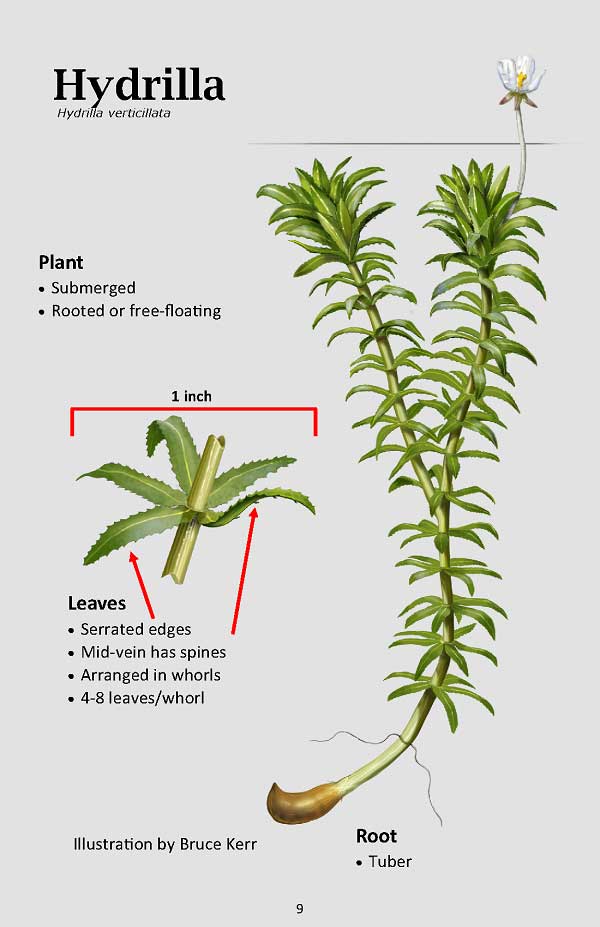
How you can help:
- Clean all plants off boats, Drain water, and allow gear to Dry
- Report suspicious aquatic plants via the hydrilla page on the RI DEM website.
- Join your local coalition in their efforts to control hydrilla @ wordenpondfriends@gmail.com
Other Educational Projects
To help educate the public about invasive aquatic plants, the Stewardship Council is developing a lesson plan for 5th grade teachers in public and private schools to incorporate into their science curriculum. The plan includes new vocabulary, fundamentals of ecosystems, interactive role playing, discussion groups, and independent writing by the students of what we as individuals can do to stop the spread of damaging invasive species. The focus is on Hydrilla because it is the current invasive species of most concern in RI and CT. However, the lesson plan would be applicable to any invasive aquatic species. The hope is that children will feel empowered to make a difference in their environment, in addition to helping spread the word about aquatic invasives to their friends and parents. In the near future we anticipate having a lesson plan for home-schoolers available on the Wood-Pawcatuck Wild and Scenic Rivers website.
These projects were made possible thanks to the support of the Rhode Island Department of Environmental Management (RIDEM) and funding from the Wood-Pawcatuck Wild and Scenic Rivers Stewardship Council. Their grants help bring these important educational resources to the community.